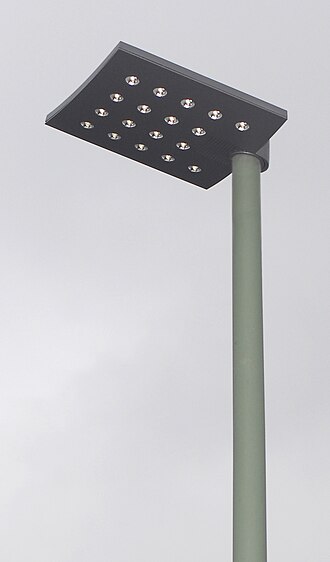
A lighting assessment for bats is a detailed technical evaluation designed to analyze how proposed or existing artificial light may impact local bat populations. Because many planning applications require strict adherence to ecological guidelines, these assessments provide the empirical data needed to balance site security with the protection of sensitive wildlife.
Why Bats Are Highly Sensitive to Artificial Light
A bat's sensitivity to artificial light is deeply rooted in its evolutionary adaptation to a nocturnal lifestyle. Cave-dwelling bats and nocturnal insectivores are especially vulnerable to sudden changes in their dark environments.
Retinal Adaptations: Bat retinas contain a high proportion of rods—specialized cells designed to maximize vision in dim conditions, making bright artificial light blinding or highly disruptive.
Predator Avoidance: Bats hunt at night specifically to evade avian predators, such as birds of prey. Artificial illumination strips away this protective darkness, often forcing bats to alter their flight paths or avoid illuminated areas entirely.
Foraging Disruption:Light pollution draws insects away from natural habitats and concentrates them around light sources, pulling bats away from their preferred hunting grounds and disrupting local food webs.
Roost Abandonment: Light spilling onto roosting sites (such as trees or buildings) can cause bats to delay their evening emergence, or worse, abandon their roosts entirely.
Core Components of a Bat Lighting Assessment
To ensure a development does not trigger a statutory nuisance or harm protected species, our assessments map artificial light against local ecological data.
Ecological Baseline Integration: We identify the specific bat species present, map known roost locations, and plot out vital commuting flight paths and foraging areas. We also account for new habitats created for Biodiversity Net Gain (BNG).
Lux Contour Modeling (Isoline Mapping): We utilize advanced photometric software to map light spill. For sensitive habitats, the strict regulatory threshold is 0.2 lux (roughly the intensity of a full moon). Our lux contour plans prove that light spill onto trees, hedgerows, and the ground remains at or below this limit.
Fixture Analysis: We evaluate existing and proposed lighting. Often, we find that deploying a greater quantity of smaller, low-power fittings provides much better ecological outcomes than using a few high-powered floodlights.
Mitigation Strategies for Planning Compliance
When baseline models exceed the 0.2 lux threshold, we recommend highly specific, bat-friendly lighting mitigation strategies:
Spectral Mitigation: We mandate the use of warm white LEDs (specifically 2200K or >550nm). This color spectrum is drastically less disruptive to the bat's retinal response and minimizes the attraction of their insect prey.
Directional Cut-off Technology: We ensure zero upward spill (sky glow) by horizontally aligning fixtures, utilizing rear-shielding baffles, and strictly avoiding upward-facing floodlights.
Physical and Operational Controls: We specify strict operational curfews (e.g., turning off non-essential lights at 21:00) and recommend habitat management, such as using dense shrubs or trees as natural light-blocking barriers.
Principal Differcnes Between ROI & The UK Lighting Regulations
There are anumber of factors we will include when writing areport (and conducting Lux Cotour Moelling) for sites in Ireland
Relies on Bat Conservation Ireland (BCIreland) guidelines, but frequently cross-references UK ILP standards due to a lack of heavily formalized, ROI-specific photometric standards for bats.
The NPWS and Irish planning authorities often demand tighter integration between lighting models and ecological surveys before granting consent, typically absorbing them into a broader Environmental Impact Assessment Report (EIAR) or Appropriate Assessment (AA)
Irish County Councils heavily favour mandating post-installation verification surveys as a strict planning condition, requiring physical on-site lux meter validation before a facility can be officially signed off.
Similar spectral requirements apply, but ROI ecologists place a heavier emphasis on preserving entirely dark "wildlife corridors" rather than just mitigating light spill through LED color temperatures.
There are many ways in wqhich we can help you with lighting assessments for Bats and the earleir you contanct us, the more we can help. We will quite happily help you with site layout to avoid problems down the road.
 Southwest Environmental Limited