 Southwest
Environmental LimitedSouthwest
Environmental Limited
Southwest
Environmental LimitedSouthwest
Environmental Limited| London |
| 02076 920 670 |
| Exeter |
| 01392 927 961 |
| Manchester |
| 01612 970 026 |
| Bristol |
| 01173 270 092 |
4 - Pay as You
Throw
Although incineration reduces the amounts of waste to land
fill, efforts should still be made to limit the amount of waste to land fill.
The commercial and industrial sectors are well covered with the following
guidance
“Comply with your
duty of care, Use an authorised waste carrier, Check your carrier is registered,
Use waste transfer notes, Pre-treat waste for landfill, Follow hazardous or
special waste controls, Have a permit or licence[xviii]”,
As well as obligations under Packaging Regulations 2003, EPA,
and EPR for Permitted Activities. . . .
The average householder gets off pretty lightly, they are
asked nicely to recycle but successful prosecutions are seldom carried through
to fruition. Pay as you throw schemes have met with mixed results.
“70% of both women and men said they would be more careful about creating waste if they had to pay for it to be collected[xix]”
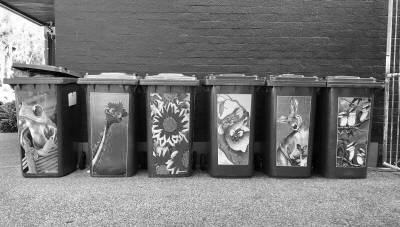
There is a clear case for pay as you throw the problem comes when attempts are made to implement it.
However there have been technical issues with trial in South Norfolk:
John Fuller of South Norfolk District Council :
“The technology just didn't work”
Approach 1 -
Pay as you throw on a volume only basis:
A simplified
system is required without too much tech to go wrong. A volume only system could
provide this.
Any new scheme would need to address the technical problems
encountered in the past but there is serious potential for waste reduction in
this area.
How it Might Work:
1.
If you
want your bin collecting, you put it out for the bin man on the prescribed day.
If you don’t want it collected then you keep it back from the road, a flagging
system could be used to highlight that a resident wants their bin emptying.
2.
The bin
man types the number embossed in the bin, or the house number name in to a PDA
type device, and you are charged a set amount for the collection. Alternatively
a high resolution GPS system could be used to plot the location of the pick for
the bins. Recycled items are not charged for, nor is green waste which is put in
separate bins.
3.
Charging could be implemented via a charge or a rebate on council tax, the
latter would no doubt receive wide spread report.
Cons:
Recycle / Green Bin Pickups will have to be more frequent, and provisions
will have to be made to recycle as much waste a possible as council / UAs
will be under pressure to do so by the public.
People will obviously try to abuse the system, compacting
rubbish in to their bin, or hiding household waste in with the green waste
etc. For these offenders day trips should be organised to waste management
facilities, to educate them on the need for recycling, they should visit a
land fill and see for themselves what happens to their rubbish.
Pros:
People
would soon start to take notice of the packaging that they buy, it would get
left in the shop, forcing the shop to change, or they would swap to a card
packaged product from a plastic one, because they know card can go in the
recyclable bin for free.
Approach 2 -
Get Strict:
Pilot Schemes have met with success in countries with greater “discipline” than
the UK i.e. Korea:
“Estimation results using 3017 Korean household survey
data indicate that a rise in waste collection fee induces households to recycle
more wastes. However, this effect is partially offset by decreases in
source-reduction efforts due to the feedback effects, resulting in relatively
lower price elasticity of demand for solid waste collection services. This
implies that household demand for solid waste collection services will not
decrease much with additional increases in the collection fee, unless further
recycling incentives such as more frequent recyclable pickup services are
accompanied.[xxi]”
Very strict recycling “regimes” have managed to implement
100% recycling policies. Taiwan is one such Island forced to adopt very
stringent measures to Clean Up its act.
Cons:
This will
not work in the UK, we are too militant.
Pros: It will deliver the best results of any system.
The below section was written by a machine.
Pay As You Throw (PAYT) is a variable-rate waste charging model where users are charged based on the amount of waste they generate. By treating waste collection as a utility—similar to electricity or water—PAYT systems provide a direct financial incentive for waste reduction and recycling.
Reflecting on the waste landscape from twenty years ago, PAYT was often viewed as a radical or politically sensitive concept in the UK, primarily discussed in academic circles as a theoretical way to meet landfill diversion targets. Today, the situation has evolved through the widespread implementation of data-driven collection systems. While universal residential PAYT remains a hurdle in many UK regions, we have seen a massive shift in the commercial sector where "pay-by-weight" is now the industry standard. The technical barriers that existed two decades ago—such as the cost of weighing technology and data security—have been largely overcome by the Internet of Things (IoT) and RFID tagging, allowing for seamless tracking that was technically impossible in the early 2000s.
Human Comment: Despite this we still see waste being exported all over the world, to places where it is not meant to be.
The transition toward variable-rate waste management has been driven by several fundamental shifts in technology and policy:
At Southwest Environmental Limited (SWEL), we utilize our 15-year track record and technical authority to help clients navigate the complexities of modern waste management. From Servicing and Recycling Strategies to Site Waste Management Plans, our professional accreditation (IES/CIWEM) ensures your project is both compliant and economically efficient.
[xx] Kgbo [CC BY-SA 4.0], via Wikimedia Commons
[xxi] The effects of unit pricing system upon household solid waste management: The Korean experience
[xxii] https://www.environment-agency.gov.uk/news/107552.aspx?page=6&month=5&year=2009
[xxiii] https://www.environment-agency.gov.uk/news/107552.aspx?page=6&month=5&year=2009
[xxiv] https://www.hwca.com/publications/news.php?id=446
