 Southwest
Environmental LimitedSouthwest
Environmental Limited
Southwest
Environmental LimitedSouthwest
Environmental Limited| London |
| 02076 920 670 |
| Exeter |
| 01392 927 961 |
| Manchester |
| 01612 970 026 |
| Bristol |
| 01173 270 092 |
Here at SWEL we have been writing reports on industrial processes and environmental impact for 15 years. You very likely need us to help you on your journey to get certified for an All-Purpose Cleaner Eco Label.
Obtaining the EU Ecolabel for All-Purpose Cleaners (which includes window cleaners and sanitary cleaners) is a badge of excellence. The process is governed by strict "Background Reports" that analyze everything from the toxicity of a single molecule to the weight of the plastic bottle.
Follow these five steps to navigate the certification process:
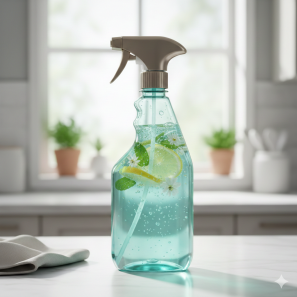
First, ensure your product fits the EU definition. This category covers products intended for the routine cleaning of floors, walls, and other fixed surfaces. It includes:
All-purpose cleaners (diluted or undiluted).
Window cleaners.
Sanitary cleaners (for kitchens/bathrooms).
Note: It excludes disinfectants or cleaners meant for specific industrial machinery.
This is the most technical hurdle in the Background Report. The CDV measures the toxicity of your product to aquatic environments.
The Math: You must calculate how much water is needed to dilute a dose of your cleaner so that it no longer harms aquatic life.
The Limit: Each product type has a maximum CDV limit. To pass, you must select surfactants and ingredients that biodegrade easily (aerobically and anaerobically).
The Ecolabel "Blacklist" is extensive. You must cross-reference every ingredient against the Excluded or Restricted Substances list:
Fragrances: Must be manufactured according to the IFRA code of practice. Many potential allergens must be labeled or restricted.
Preservatives: Only those used to preserve the product (not the surface cleaned) are allowed, and they must not be "bioaccumulative."
Phosphates: Strict limits are placed on total phosphorus to prevent water algae blooms (eutrophication).
The Background Report emphasizes that a "green" cleaner is useless if it doesn't clean.
Performance Test: You must prove your cleaner works as well as a "market leader" or a generic reference detergent. This involves standardized tests on "standard soil" (grease, lime, or dust).
Packaging Ratio: You must calculate the Weight/Utility Ratio (WUR). This ensures you aren't using excessive plastic for a small amount of cleaning power. Recycled content in your bottles is highly encouraged and often required for high scores.
Once your formula is locked in, you compile your evidence. This includes:
DID List References: Use the Detergent Ingredient Database to pull the toxicity data for your chemicals.
Laboratory Proof: Results from independent, accredited labs.
Consumer Instructions: Your label must clearly show the correct dosage. Using too much cleaner is an environmental hazard, so the "Ecolabel way" is to teach the consumer how to use less.
We can offer a full fixed price services, or just help out with a few hours work here and there. Contact us for help (hit the big yellow button at the top of page)
The below section was written by a machine.
The EU Ecolabel is a voluntary scheme established in 1992 to encourage businesses to market products and services that are kinder to the environment. Whether you are applying for certification for all-purpose cleaners, personal computers, or bed mattresses, the process requires rigorous technical documentation and compliance with strict ecological criteria.
At Southwest Environmental Limited, we act as technical liaisons, helping manufacturers navigate the "Flower" label requirements. This often involves detailed life cycle assessments and verification of supply chain sustainability. Our role is to ensure that your product meets the highest environmental standards, allowing you to gain a competitive edge in the European market.
Once a product is awarded the EU Ecolabel, it is recognized across the entire European Economic Area (EEA). This provides your brand with instant credibility in the following countries:
The application process often intersects with other environmental regulatory frameworks. For example, if your production facility requires infrastructure upgrades to meet the water quality standards of the Ecolabel, we can provide a Sustainable Drainage Systems (SuDS) Strategy to manage runoff effectively.
Furthermore, manufacturers looking to align their products with broader corporate goals may benefit from our Zero Cost ESG Consultation, ensuring that your Ecolabel success is part of a wider sustainability strategy. By combining product-level certification with site-specific audits and environmental permitting, SWEL provides a comprehensive technical service for modern industrial leaders.
With over 15 years of industry experience and a track record of over 900 projects, we provide the technical authority required to guide your product through the certification bodies of any EU member state.