 Southwest
Environmental LimitedSouthwest
Environmental Limited
Southwest
Environmental LimitedSouthwest
Environmental Limited| London |
| 02076 920 670 |
| Exeter |
| 01392 927 961 |
| Manchester |
| 01612 970 026 |
| Bristol |
| 01173 270 092 |
After a request from a client a sustainability statement was developed in conjunction with a planning application for a major Health Care development, the following key issues were outlined.
15 Years ago when we started to write these sustainability statements, chapter content was fairly limited. For more up to date projects please see our project blog.
A sustainable approach favors the use of “brown-field” sites. The site is deemed as “brown field” by the Local Planning Authority, and as such the development does not occupy previously undeveloped land. Use of “brown field” land will contribute towards a “very good” BREEAM rating.
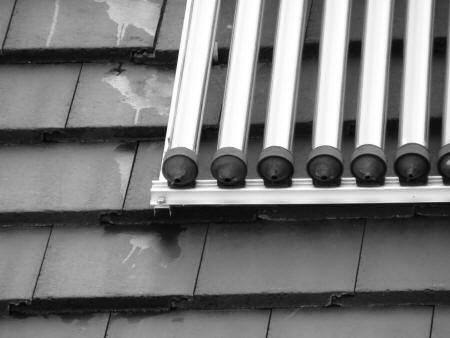
The project intends to incorporate renewable energy sources in the form of “low flow” hot water solar panels; this will be used to meet 10% of the building's power needs under the “Merton Rule”. It will be possible to generate 10% of building energy needs solely from heating water.
The building design makes excellent use of natural light, keeping energy consumption low during daylight hours. Use of materials with good thermal properties will minimize energy loss through a reduction in escaping heat.
Image above: Barelyhere [CC BY-SA 4.0], via Wikimedia Commons
Energy efficiency will be achieved by the following methods:
Sustainably sourced materials will be used where possible, for example, FSC wood will be used in construction. Wherever possible, materials with low embodied carbon will be used, and construction waste will be prevented from the design stage onwards.
A “very good” BREEAM rating will lead to the installation and commissioning of water-saving devices or rainwater harvesting.
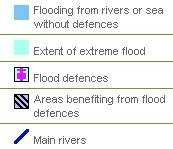
In order to minimize impact on surface water drainage systems in the area, the project will include sustainable drainage features. Examples include feeding surface water into existing SUDS schemes, permeable car parking areas, and soak-aways for roof-born rainwater. Environment Agency Flood Risk maps show that the site has a 99% chance of not flooding.
Where possible, the ecology of the site will be preserved and efforts will be made to increase biodiversity. Submitted plans show the planting of trees as part of the landscaping process, which may become habitats for new species.
With waste-disposal charges rising year on year, waste management will be carefully considered. Areas sufficient for pre-treatment of waste will be included within the project. Clinical Waste and General Wastes will be handled separately, and the appropriate licenses will be sought or existing licenses modified.
Is there an accommodation mix that reflects the needs and
aspirations of the local community?
NA
- Accommodation is provided for a very specific group of people
in mind. Its design is based upon the accommodation of patients
with a need for rehabilitation .
Is there a tenure mix that reflects the needs of the local
community?
NA
- The buildings tenure will be agreed upon between the NHS .
Does the development have easy access to public transport?
Yes
- The Hospital Site is well served by public
transport.
Does the development have any features that reduce its
environmental impact?
Yes
- The development has many features to reduce it
environmental
impact these a specified in the above document (S10-012)
Character
Is the design specific to the scheme?
Yes.
Does the scheme exploit existing buildings, landscape or
topography?
Yes
- The Building is an extension of the existing building.
Does the scheme feel like a place with distinctive character?
NA
- The building is Utilitarian in character, which is in line
with its intended end use, and the character of the buildings
surrounding.
Do the buildings and layout make it easy to find your way
around?
Yes
- The building is designed as a residential wing of the existing
facility; it will have relevant signs and directional notes in
order to make for easy navigation.
Are streets defined by a well-structured building layout?
Yes
- Streets will be unaffected.
Streets, Parking & Pedestrianisation
Does the building layout take priority over the streets and car
parking, so that the highways do not dominate?
Yes
- The building foot print eclipses existing car parking.
However, car parking spaces equal to those removed are shown on
the proposed development plan.
Is the car parking well integrated and situated so it supports
the street scene?
Yes
- Car parking is integrated with a landscaping scheme, and is
designed to be aesthetically pleasing.
Are the streets pedestrian, cycle and vehicle friendly?
Yes
- A cycle store is provided within the remit of the new
development. Pavement will provide safe passage for pedestrians.
Does the scheme integrate with existing streets, paths and
surrounding development?
Yes
- The proposed layout ties in well with the existing layout.
Are public spaces and pedestrian routes overlooked and do they
feel safe?
Yes
- Pedestrian routes will replicate the experience of other
pedestrian routes within the hospital grounds, that is a safe
pleasant experience.
Design and Construction
Is public space well designed and does it have suitable
management arrangements in place?
Yes
- Visitors are free to use the adjoining open areas, hallways
etc will be maintained in accordance with NHS guidelines.
Do the buildings exhibit architectural quality?
Yes
- The buildings architectural qualities reflect it intended
purpose, that is a building design solely focused on meeting its
intended purpose.
Do internal spaces and layout allow for adaptation, conversion
or extension?
Yes
- The building is an extension of an existing facility. Subject
to available space and funding the building could be extended /
altered to suit a variety of needs.
Has the scheme made use of advances in construction or
technology that enhance its performance, quality and
attractiveness?
Yes
- Cutting edge materials will be used in the construction of
this building. Priority will be given to materials that reduce
the operating costs of the development, whilst minimizing its
environmental impact.
Do buildings or spaces outperform statutory minima, such as
building regulations?
Yes.
Acting on instructions from a repeat client, SWEL are to prepare
a sustainability statement for a car show room in Nottingham.
The car show room is a new build, and will incorporate a wealth of
sustainability features. The report submitted complements existing
plans and specifications, whilst meeting requires for content set by
the local planning authority.
The proposed development sees the conversion of a a terraced house into two flats. The sustainability statement was produced and covers the carbon reduction (40%) as required by Bristol City Policies, and also looked in to Cycle Parking and Refuse Storage.
In order to assess energy consumption for the development detailed SAP calculations were undertaken. To derived TER and subsequent DER. As well as high levels of fabric energy efficiency the scheme is to use combine heat and power. This will not only provide very low carbon emissions, it also provides scoring benefits under NOX emissions, and low carbon technologies sections of the Code for Sustainable Homes.
Read about more sustainability projects on our Weblog.
This page serves as a record of our professional delivery in providing Sustainability Statements for planning. As an established environmental consultancy with over 15 years of industry experience, Southwest Environmental Limited (SWEL) has completed over 900 projects across the UK, ensuring clients meet rigorous local and national environmental standards.
Our project work in this sector involves the creation of detailed technical evidence to satisfy Local Planning Authorities (LPA). Key deliverables for this project type include:
Success in sustainability reporting often requires the integration of multiple technical disciplines. Our "proof of work" demonstrates our ability to link diverse environmental factors:
The ultimate goal of our Sustainability Statements is to facilitate a smooth route to planning consent. By providing robust technical evidence and leveraging our professional accreditations (IES, IAQM, and BIAC), we minimize delays and help developers identify the most cost-effective sustainability measures. This project history is part of our national portfolio, visible on our National Project Portfolio Map.
Directed by Will Thorpe (BSc Hons, FGS, MIEnvSc), Southwest Environmental Limited provides the expert oversight needed for complex planning requirements. We remain dedicated to delivering verifiable, high-quality environmental reports that stand up to the scrutiny of regulators and planning officers alike.
